


AI Disruption
It’s Happening. The AI revolution is well underway. Most likely it will accelerate both in rate and scope. We must consider what to do in the worst-case scenario that AI is a true substitute for human cognition, a subject we have discussed several times in this blog.
But also, we need a plan to mitigate the radically disruptive effects of AI even if no further advancements were made. The adoption of existing AI technologies alone would have profound economic and social implications. We propose using AI to radically improve how humans learn. We make the national case here - but it is as relevant to all businesses, organisations and us all, as individuals.
The Case for Optimism
While we know a lot of facts about the brain and human psychology, we don’t really know how either ‘work’. We are not sure what consciousness is. Intelligence is notoriously hard to define. Even reasoning, what constitutes knowledge or understanding, all are uncertain, contested concepts. Under such circumstances, we keep coming up with new benchmarks for testing AI in the way we have tested human intelligence, and increasingly with tests no normal human, and no deeply expert human, would pass. And AI keeps not just passing these tests but surpassing them. Hence the bearish case must be planned for.
But if we don’t know what human intelligence is or how it works, we cannot say that human intelligence won’t continue to play an important role in the economy, in making decisions in the future. It might, even if it is hard to say with any confidence how.
If we assume this optimistic case, AI will not replace all humans. AI becomes a complement to human cognitive labour. We work with it, and it creates new jobs.
Still, many will be displaced from their current roles. We can already see that lots of things we do now will be done better by AI, and could be done better by AI now, even if not all things. How do we plan for the scenario of massive displacement?
There are two key challenges: mitigating large-scale social disruption and ensuring that displaced workers transition into new, productive roles as quickly as possible.
Re-training will be essential. The likelihood that the skills needed in an AI-driven world match those of the pre-AI era is effectively zero. The UK, or any nation that enables large-scale, rapid retraining, stands to gain significant advantages. However, this process is costly and difficult, requiring substantial human and material resources at a time when those resources are increasingly valuable.
Education and AI
Education is a solved problem in principle—humanity knows how knowledge transfer works. The issue lies in implementation: mass-learning is both pedagogically suboptimal and logistically inefficient. The core challenges are:
· A teacher cannot dynamically assess every student's exact knowledge state in real-time.
· Students themselves struggle to identify their precise learning needs.
· Traditional education incurs high logistical costs and opportunity costs.
· The sheer order of magnitude of change will be disconcerting, as we are culturally accustomed to large-class learning rather than individualized tuition.
AI-assisted online learning can address these problems. AI tutors approximate individualized instruction, while online learning significantly reduces costs. The key lies in breaking down knowledge into minimal, structured chunks, providing explanations, practice, instant feedback, and spaced repetition—each of which is a well-understood technique.
AI is uniquely suited to serve as a 1:1 tutor, providing not just instant feedback but also dynamically generating new materials, conducting low-stakes testing, and evaluating progress in near real-time. This allows students to learn at their own pace, maximizing retention and efficiency. Students would have access to tutors with a far higher IQ and expertise than humans can provide. The human average on an IQ test is ~100. Current AI models have surpassed this. They will only improve from here.
Despite this, this approach does not replace teachers but redefines their role. Educators would focus on facilitating hands-on practice, coaching, and higher-order skills like critical thinking, evaluating AI-outputs, and communication. For many adult and adolescent learners, direct contact time with teachers may decrease, but learning efficiency would increase.
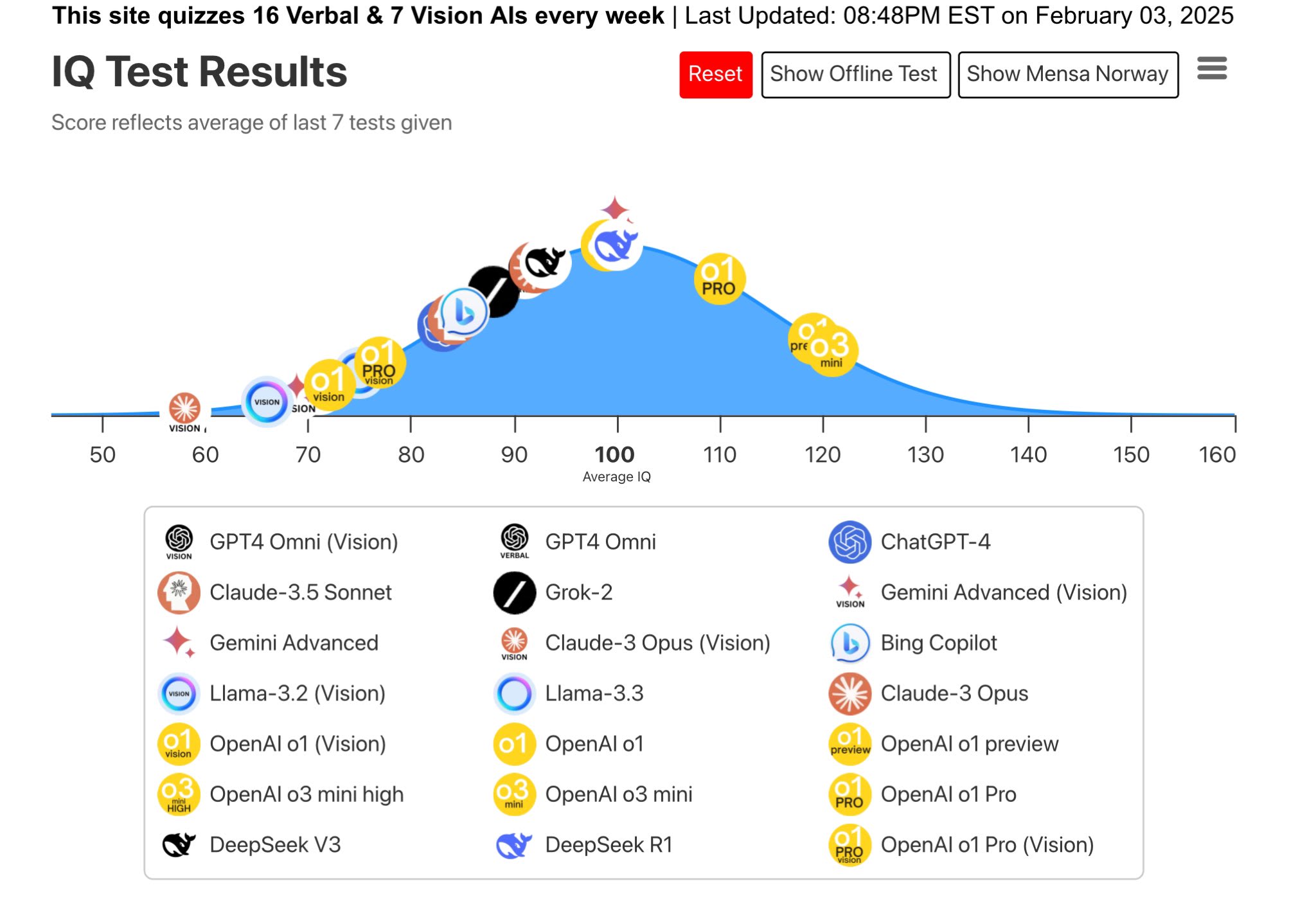
Image from @highlyretired on X, 4 Feb 2025.
The Present
There are a growing number of examples where AI is already radically improving education. Recall the mantra that the AI we are using today is the worst AI we will ever use. We can also assume that as the AI itself improves so to will we improve our knowledge of how best to employ it over time. Therefore it is almost certain that the gains we describe here will be improved upon, perhaps radically improved upon, as AI gets better and we get better at using it in education.
Take the World Bank AI pilot in Edo State, Nigeria, which focused on English Language, AI (ChatGPT) Knowledge, and Digital Skills. After six-weeks of access to the AI tutor, the results showed students:
• Gained two-years of learning, a 1200% increase
• Improved their ability to learn
• Benefited more as exposure to ChatGPT training increased, with the ceiling unknown
• Benefited more than students in 80% of all the World Banks other (often larger scale, more expensive) educational interventions
This was likely achieved with OpenAI’s GPT 4-turbo model the most modern at the time of the intervention. GPT-4-turbo is now fifteen months and ~ten models behind the most recent OpenAI releases.
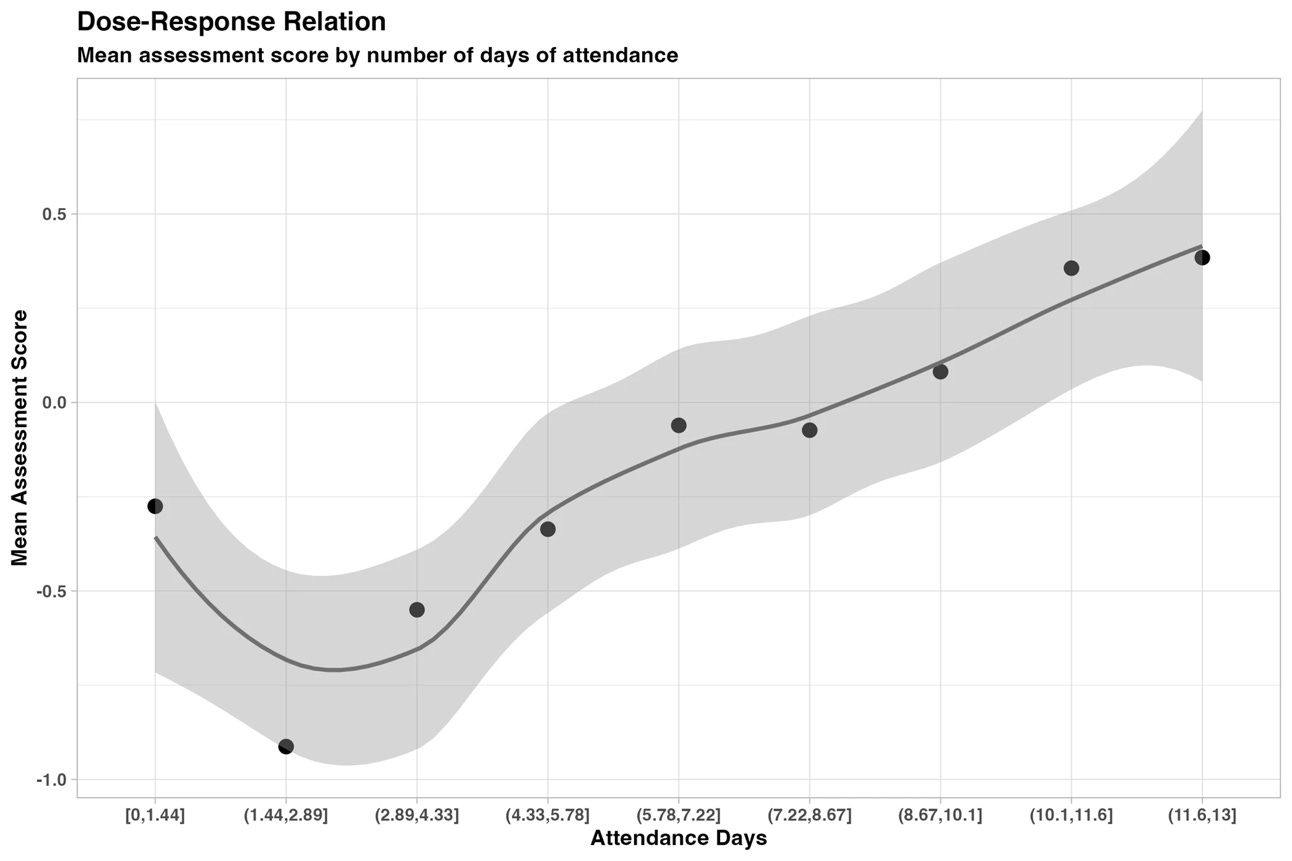
Figure 1. Chart shows how increased exposure to ChatGPT increased Nigerian students performance on the test - we do not where the ceiling is for this 'dose-response' – how much better can students be with greater use of ChatGPT?
More examples:
· In Ghana, the ChatBot ‘Rori’ made available via WhatsApp for maths tuition saw students gain the equivalent of a one year’s worth of classroom learning in six-months. This from one sixty-minute session a week, at a cost of just $5 per student.
· At Harvard, an AI chatbot tutor enabled undergraduate students in physics classes to learn twice as much in less time, reporting significantly higher engagement compared to those in taught with ‘active learning’ techniques in a traditional classroom.
· In disadvantaged areas of the Southern United States an AI ‘Tutor Co-Pilot’ significantly improved tutor performance, as measured in student outcomes (4% improvements on average, 9% improvements for students taught by the weaker tutors).
The Future
Classroom education has changed little in the past century. Despite efforts to optimize, fundamental constraints limit the full application of pedagogical science. Overlaying new solutions on top of existing structures demands extra effort from students and exacerbates educational inequality. Instead, the best learning should be available to all.
Humans will never match AI in raw fact retrieval. While factual knowledge remains essential, superior internal models and conceptual understanding matter more—just as the ability to tackle mathematical problems outweighs rote memorization of formulas.
To remain competitive, humans must optimize their strengths. AI-enhanced learning offers a scalable solution, and current online educational content, though plentiful, lacks the necessary individuation, optimization, and real-time feedback to maximize learning efficiency.
A networked AI can learn what students need to know dynamically and empirically, refining its teaching strategies as it gathers data from learners in real-time. It can personalise based on skill, but also optimise to individual psychological make-ups and preferences. This adaptive approach ensures that education remains responsive to individual needs, eliminating traditional delays in curriculum improvement. The tools to implement this revolution exist today—it is time to use them.
National Strategy
There is more to this than just mitigating consequences domestically, nationally, for our children and all of us as workers, business owners, as a society and as citizens – urgent though this is.
We can and should be using the global reach and credibility of organisations like the BBC and the Open University to provide similar tuition globally. Such a service might offer British credentials – perhaps GCSE’s or ‘A’ Levels, marked by AI with far higher consistency than human teachers can manage (see Olex.AI’s impressive results in marking English school work), or degrees from our top Universities, MOOCs but enabled by cutting edge tech that could hugely increase the effectiveness and efficiency of knowledge transfer.
We could use it:
· to help other nations reduce the disruption the AI revolution will bring
· to reduce migratory pressures on ourselves by helping other nations harness the AI revolution
· to identify global talent, either for recruitment as part of a global talent spotting campaign, or for the award of accelerated immigration admission for the top performers
· to identify or qualify for the award of e-citizenship, e-residency or the right to found an e-business covered by UK law, and able to access UK banking and other services.
For those in poor or corrupt countries trying to build global businesses, this could be an invaluable opportunity.
It may be that poorer countries, and the most disadvantaged in society, benefit most from AI tutoring, overcoming barriers like large class sizes, teacher migration, teacher shortages, and teaching by unqualified staff. In some studies of AI, both in educational and professional setting - such as with Tutor Co-Pilot in the Southern US- it has been the lower performers that improve the most when AI assists.
For the UK, allowing AI talent to earn in the UK while living wherever they want through e-citizenship, e-residency or e-businesses, might raise tax revenues – in 2023 Estonia received €67.4 million in tax from e-citizens and e-businesses, a 33% increase on the previous year. What might the UK raise if not only offered such an option, but proactively awarded it to the highest performing students globally?
An objection here might be that allowing talent in poorer countries to found businesses in the UK will take tax revenue from the areas where they live. But the alternative is often for them to migrate. By staying where they are they spend locally, benefitting the economy. And once their businesses prosper, shielded by the UK’s legal system and with access to global markets from the UK, expansion into their country of origin seems likely - from a much more secure base.
A final caveat: we must remain wary of this early evidence for AI’s benefits in improving learning. From 2008, Professor Sugata Mitra gave inspiring talks on the effectiveness of his ‘Hole in the Wall’ experiments – where students in impoverished areas were given access to a computer connected to the internet and self-learned complex subjects with no tuition. In 2013, Mitra won the Ted Prize for his ‘Kids Can Teach Themselves’ talk. In 2015 the Times Education Supplement ran a headline claiming ‘Internet learning boosts performance by seven years’. These claims are now disputed, albeit not debunked. What we should note is the need for experimentation, testing of claims and careful implementation.
Care and caution must not mean prevarication and delays. It’s Happening. The AI development and AI impact will likely now scale logarithmically rather than linearly. Like the pandemic, we will feel its effects gradually, and then suddenly. We must respond with the urgency needed, and pre-emptively, not retrospectively. Education, Education, Education, as one Labour leader once put it.